


Tracing Quiet Truths
Where observation meets empathy, the story begins – in stillness and shadow, where the contours of memory emerge. Vivek Muthuramalingam photographs not just what he sees, but what he’s trusted with.
– P Abigail Sadhana Rao
Trained first in medicine, then in fine art, Vivek Muthuramalingam moves through the world with a gaze both clinical and compassionate. Based in Bangalore, his multidisciplinary practice spans photography, writing, and video, rooted always in patient listening and an enduring curiosity for human lives. His work often lingers in the spaces where people and landscapes meet, tracing stories shaped by memory, migration, and ecology. Whether walking through forested villages or experimenting with 19th-century printing techniques in his studio, he listens closely for the stories that unfold slowly and truthfully. In the interview that follows, Vivek reflects on how photographing land through its people and embracing slower, tactile processes that can open space for care, connection, and meaning.
Excerpts from the interview
- Can you share your journey into photography and how your focus on local communities and ecology evolved?
When I decided to leave my medical practice in 2005 and take up photography, I knew it had to be a kind of work that kept me close to people. However brief my stint in medicine was, my interaction with patients, and the empathy it demanded left a lasting impression. I’ve come to see that documentary photography has much in common with medicine; both demand presence, listening, humility, and discernment. At their core is a deep gratitude for being trusted with someone’s lived experience.
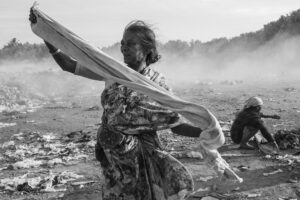
One of my first long-term projects took me to an unauthorised landfill on the northern edge of Bengaluru, where farmers had become ragpickers on their own land. Over nine months, it became evident that this wasn’t just a story about waste, but also about urbanisation, caste, migration, and bureaucracy. I realised that to tell the story of one affected community well, I had to first understand the many systems that shaped their reality.
As my work began to take me across the country, research became central to my process. Whether documenting a community or an ecological crisis, understanding the local context, listening to voices, and conducting interviews are essential, long before I lift the camera to my eye.
- What draws you to a particular story or place, and how do you know it holds narrative potential? Do you see the place itself telling a story through its people?
I believe that every place and every person carries a story worth listening to. I try to stay open, tuning into sounds and smells, absorbing the mood around me. Conversations with locals are often the gateway, and moving past the hesitation to speak with strangers reveals unexpected, often remarkable stories. That said, I approach people and places with genuine inquisitiveness and concern, whether or not those encounters evolve into visual stories.
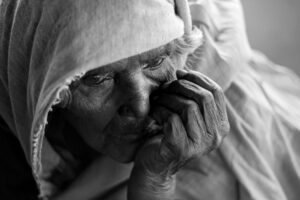
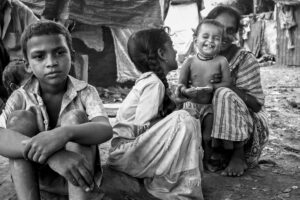
A portrait of people is often a portrait of the land. The emotions captured such as joy, exhaustion, worry, resilience, often reflect the larger story of the environment they inhabit. When done with care and sensitivity, they mirror the state of the land itself. One can often read the terrain through the eyes of those who depend on it.
- Your work reflects existential themes and everyday life. Was there a moment when you realized the power of ordinary moments?
I find immense beauty in the mundane; it’s often in these small, overlooked details that the truth of a life quietly reveals itself. I once photographed everyday objects used by a family in a farmstead in Shimoga – a few kanthari chillies, bitter gourd seeds on a yoke, light through a glass tile, a worn nutcracker, a sack on the threshold. Each spoke of the family’s way of life, their rhythms, and their relationship with their surroundings.
In the village of Amelia, eastern Madhya Pradesh, I saw young Bablu gingerly carrying a newborn calf home from the forest. The tender, instinctive way he cradled it spoke volumes about their bond. For him, it was an ordinary day. But for me, it became a quiet, powerful image that illuminated the larger story I was telling.
- How do you ethically capture powerful images of marginalized communities while building trust and portraying their stories authentically?
When working with marginalised communities, it’s essential to enter their space with humility, openness and patience. I spend time simply being present, listening, and observing. Building trust is the foundation. Once that happens, people open up, letting you witness their rhythms. You may walk with them to the fields as they sow rice or accompany them into forests to gather mahua.
I’m transparent about the purpose of my documentation and always explain its possibilities and limits. Informed consent is non-negotiable. and nothing matters more than the individual’s right to be represented with dignity and respect.
In the field, aesthetics are never my priority; the most powerful moments often go unphotographed, staying as mental images that later find form in words. Storytelling is restraint as much as it is capturing moments.
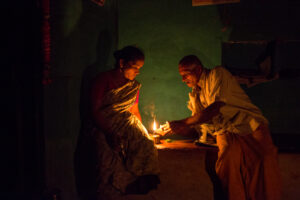
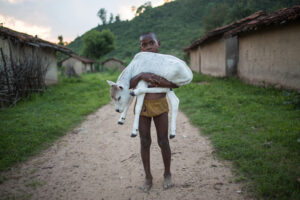
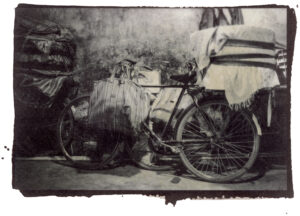
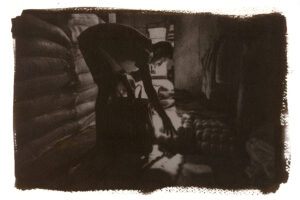
- You’ve used alternative processes like cyanotypes and albumen prints, how do these techniques deepen your exploration of local histories and human narratives? What can they convey that digital photography cannot?
I began with film but quickly embraced digital for its speed, spontaneity and freedom. Yet, over time, I sensed something was missing, though I couldn’t articulate it then.
It was during an art residency in Goa, I was introduced to early photographic techniques that resonated with the narratives I explored. While documenting poders, the traditional bakers of Goa, I used seawater from local beaches to create salted paper prints; a 19th-century technique involving a salt solution. The resulting sepia tones evoked a sense of time passed, perfectly aligning with the slow, fading legacy of these bakers.
I fell in love with alternative photography and co-founded Kanike (“gift” in Kannada) in 2019, a shared studio where I explore and experiment with rare historic photographic processes. Alternative processes slow you down, encouraging reflection on the story, material, and your role as maker. The handmade print feels intimate, tacitle and personal, carrying a tangible part of you within it.
- How has your practice shaped the way you see the world? How does your personal journey influence the stories you choose to tell?
Photography has quietly embedded itself into my everyday life. Even when I am not carrying my camera, I find myself ‘taking pictures’ in my mind, framing scenes, noticing light, and watching gestures. The act of looking through a viewfinder has trained me to become more observant, more present to the details that surround me.
Over time, photography has deepened my respect for people, made me more accepting, and opened a channel into people’s stories and, through them, their lives.
I believe every story I tell carries something of me in it and I try to stay true to the emotions I experience in the field and to honour them in the way I portray others. It’s a quiet intersection, between the observer and the observed, the personal and the collective, it’s where much of my work finds meaning.
Share