Love and Longing in Hong Kong
Wong-kar Wai’s Chungking Express masterfully examines the anxieties and aspirations of a society on the brink of political change
By Rehana Munir
It is 1994. Jackie Chan’s films, which combine martial arts with screwball comedy, are a global sensation. As a teenager, they’re what I associate Hong Kong cinema – no, Hong Kong – with. Wong Kar-wai’s brand of new wave cinema hasn’t reached my post-liberalisation Bombay bubble yet. MTV and Channel V rule the roost.
Watching Chungking Express for the first time ever, over thirty years after it was made, I’m gasping for air. Here’s a film, that for its 1 hour 42 minute duration, makes you forget about your immediate circumstances and catapults you into the working-class heart of a bustling urban centre that’s on the cusp of a big change.
Hong Kong changed hands from Britain to China in 1997. Rush Hour (1998), starring Jackie Chan and Chris Tucker, centred its plot around this historic event. In Wong Kar-wai’s Chungking universe, unlike in Rush Hour, there are rumblings of this seismic shift, but no obvious references. The film’s two love stories, centred around two lovesick cops (Cop 223 and Cop 663), are tenuously linked by geography and, more importantly, their themes. Both stories have well-defined plots, and yet so much else happens in every frame that you wonder how the director, and cinematographer, Christopher Doyle, manage this without spiralling into overindulgence.
What links the two stories most of all is a sense of place; and at the same time, of a sense of being between places. Chungking Mansions is that iconic establishment animated with raw immigrant energy; the chaos and grime it holds within its innumerable warrens is the stuff of urban folklore. Back in the day, it’s where you went to in Hong Kong for cheap electronics, an authentic aloo ka paratha, or a bloody nose. (Nowadays, the CCTVS make bloody noses a rare occurrence.) In 1994, its mix of South Asians, Africans and so many other postcolonial ethnicities made it a microcosm for Hong Kong, with the British hold over the region coming to a long-discussed end. Quite understandably, characters in Chungking Express aspire to a very western definition of freedom, glamour and success, exemplified by Hollywood.
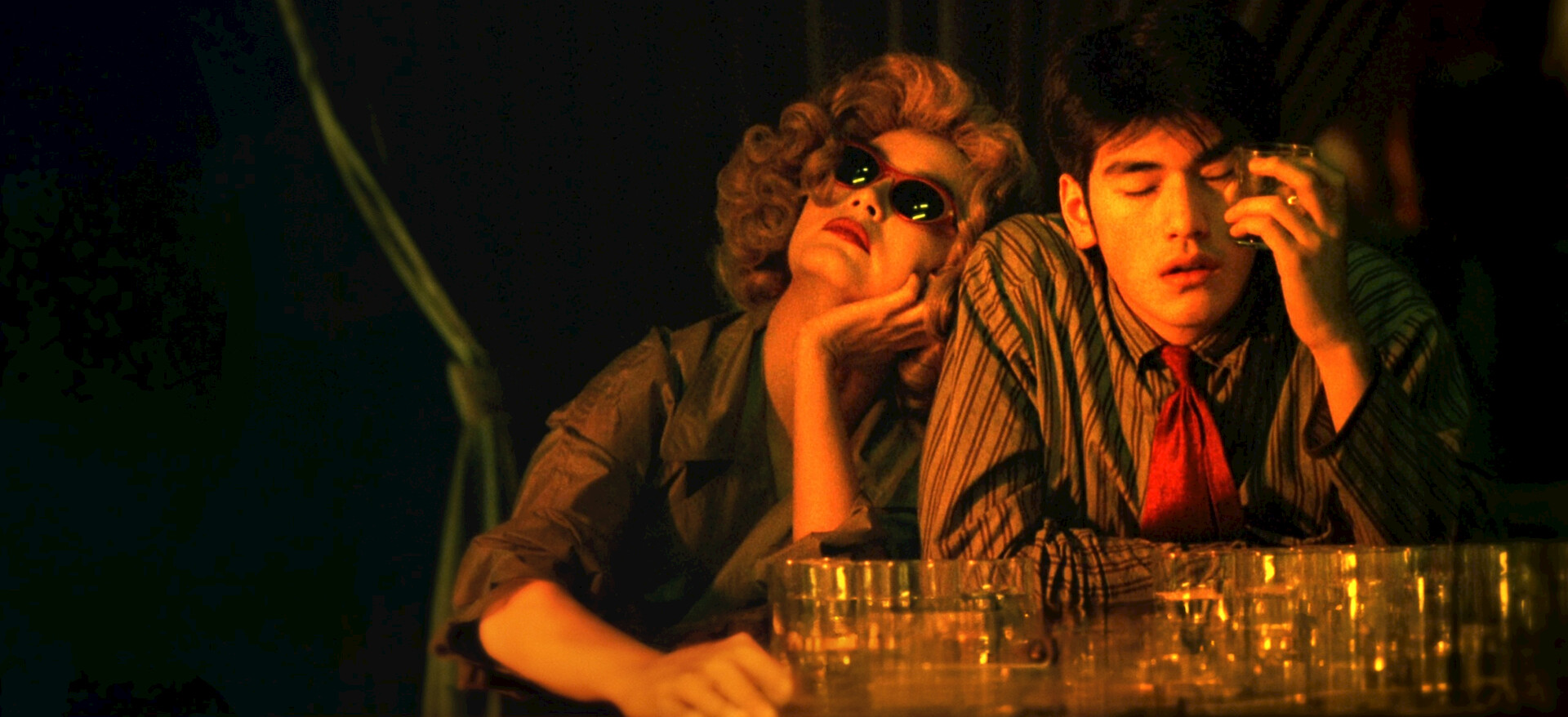
This is evident in the femme fatale in a trench coat in the first story – blonde wig, red-rimmed sunglasses (worn in the night), long cigarettes and a criminal bent. Cop 223, who falls for this enigmatic stranger, on the other hand, collects pineapple cans due to expire on May 1st – his birthday – and also because his ex, May, liked pineapples. If the femme fatale is mysterious and unknowable, he’s an open book. A Mills & Boon, even, with his fanciful notions of love, chance and connection.

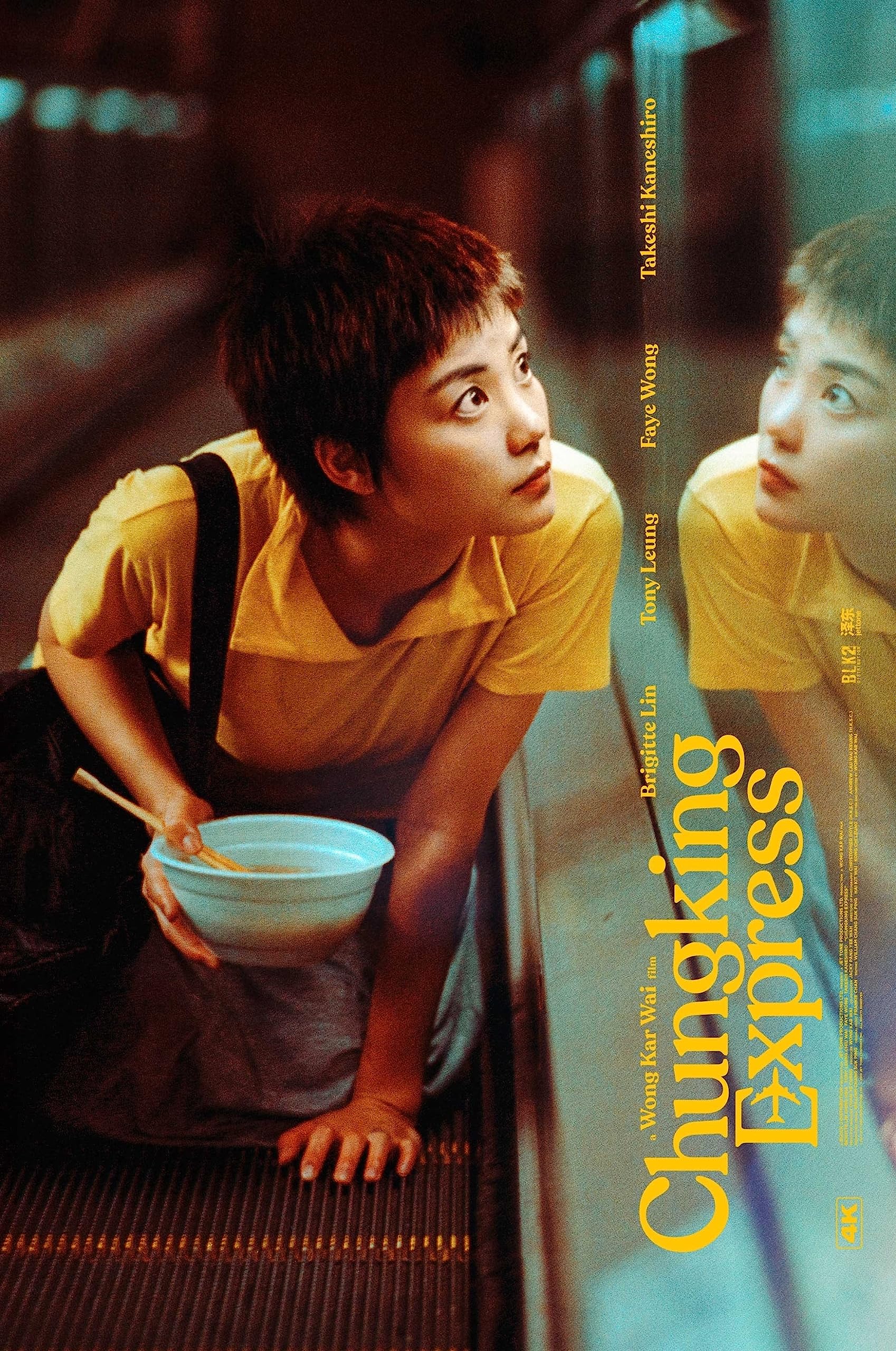
In the second story, we see Cop 663 heartbroken over a failed romance with an air stewardess – a profession that reinforces the two-places-at-once quality of the film. He soon falls for Faye, a pixieish snack-bar worker at Midnight Express – based on another familiar Hong Kong landmark from Lan Kwai Fong in Central. She’s clearly dreaming of a western escape, forever playing California Dreamin’ on loop at work at an unholy volume. She tells him she’s got almost enough saved to make her getaway. And then she falls for him, while serendipitously intercepting his apartment key, returned by his ex.
And so begins an odd and yet endearing saga of Faye sneaking into the cop’s apartment in his absence, hanging out there, and tidying it up without him getting to know about it. (How pleasing is actor-singer Faye Wong’s Cantonese version of Dreams by The Cranberries?) Sounds insane on paper. And yet the director and cinematographer make it an incredibly quirky yet moving bit of cinema. The two “lovers” do not share the same physical space in real time, and yet they do, sequentially. She’s busted, yes, but that just leads him to ask her out on a date to a bar called ‘California’. Faye doesn’t meet him there, but leaves him an envelope, which he first discards but later rescues from the rain. It holds a napkin with a boarding pass drawn on it – the date is for one year later but the destination has been blurred by the rain. They do meet at the end, and it’s exhilarating.
.originalimage.jpg)
Chance encounters, abrupt farewells, unexpected reunions. Chungking Express is that rare film that is neck-deep in emotion while being dead sure of where it stands – unlike its characters, struggling to find a home in one another. A stylistic unicorn, it features some of the most innovative and memorable camerawork – sped up and slowed down frames; crowded shots and moody reflections. Its music video vibe and dream-pop soundtrack make it a time capsule of its era, even though every generation will experience it as its own special discovery.
In 2025, when prickly borders and exclusionary laws have been regularised, Chungking Express offers a window into private, deep-seated anxieties before a big political change. Within its exquisitely crafted frames, possibilities always beckon, and hope is only a boarding pass away. That it manages to do this without sugar-coating reality is a cinematic miracle. And it does this, in large part, by being so true to its setting.
It is a film whose triumph lies in staying unwaveringly focused on the fault lines in Hong Kong society, visually – overcrowded hostels and their subaltern residents; seedy bars and grotty cafés; unhygienic markets and squalid apartments. It is against this achingly real backdrop that the quirky characters and their interior worlds come to life. In lesser hands, the film would’ve been a confused and pretentious mess. As it turns out, it’s an entertaining yet profound snapshot of a particular time and place but which, like all the best art, illuminates the universal experience of love and longing.