


THE TRAIL TO THE BLUE FORTE
Mankind isn’t kind when it is hit with the blues every now and then, or, to be explicit, on Mondays; but underwater photographer Sumer Verma is one man who is habitually hit with the blues, and yet so, embraces it with open arms and awestruck irises
– Maheen Afshan F
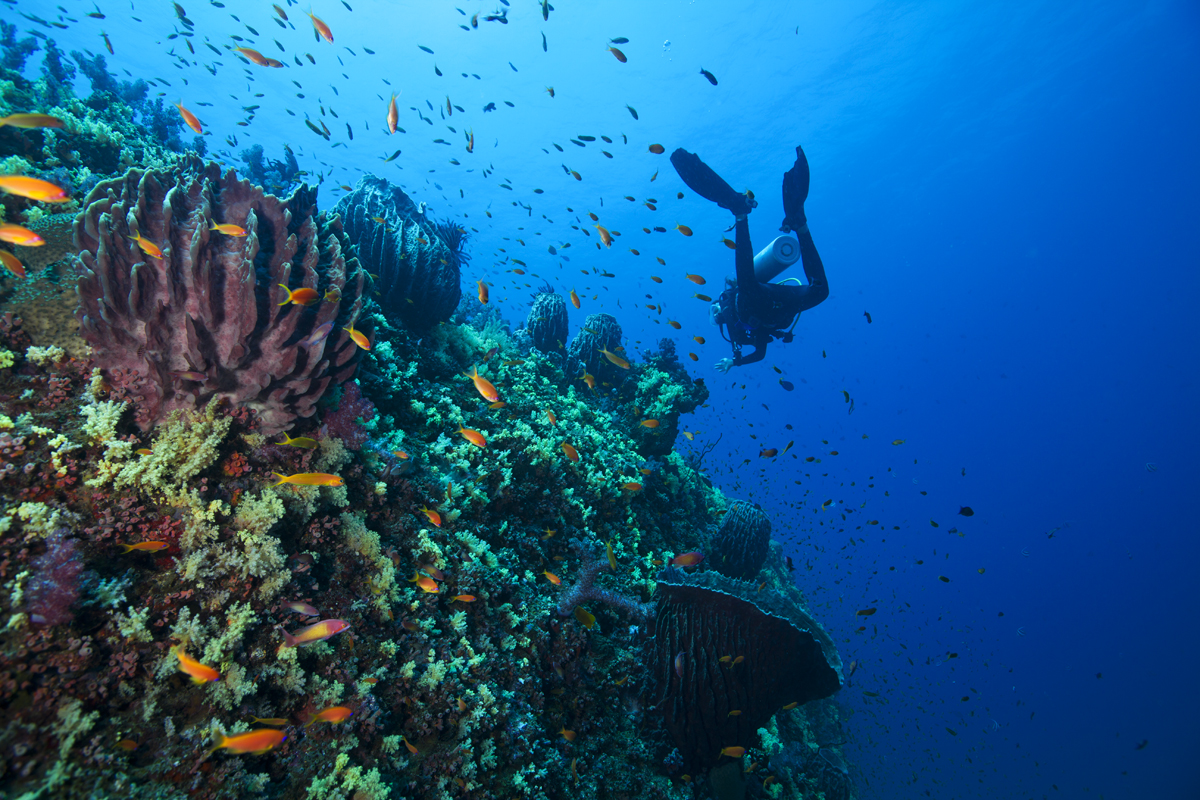
Under the soft, pastel blanket of the sky, the earth wears a quilt weaved with feathers and petals; adorned with springs and furry blossoms atop of which organisms of uncountable genes reside, with a handful of human minds curious enough to crawl underneath the wavy quilt into suspension and peer at the ocean’s wonderland.
Sumer Verma is one amongst the handful who dives deep into the dimensions of blue, only to be welcomed by prismatic marine creatures. Even after diving into the sea for over two decades, Verma is still taken by the fascination and the beauty the underworld possesses. His will to share a bit of this world he has become a part of led him to be a diving instructor and India’s first underwater photographer.
“It was literally over 20 years ago, and I still remember it very clearly. It was in Lakshadweep Islands in 1997, and I was taken with the feelings of total silence and weightlessness. Those feelings, of course, are the very essence of diving.”
To him, those feelings were very profound and he was captivated by the miraculous underworld. “It wasn’t a world which we had seen in television and films. It was a whole episode of
experience with that kind of clear water and abundant marine life, from all tiny fishes to huge sharks. And it was that experience I had in the Lakshadweep which left an impression on me, because I changed my life around to pursue scuba diving as a profession and became a diving instructor. Along the way, I got very passionate about underwater photography and film-making. It was my way of approach to share the beauty of the ocean with people who are not aware of the ocean.”
On the surface, the ocean wears serenity; flowing as the wind blows, remaining incomparable to the orchards on land. But it is said that when you begin exploring the mystery it is, you will drown mesmerised.
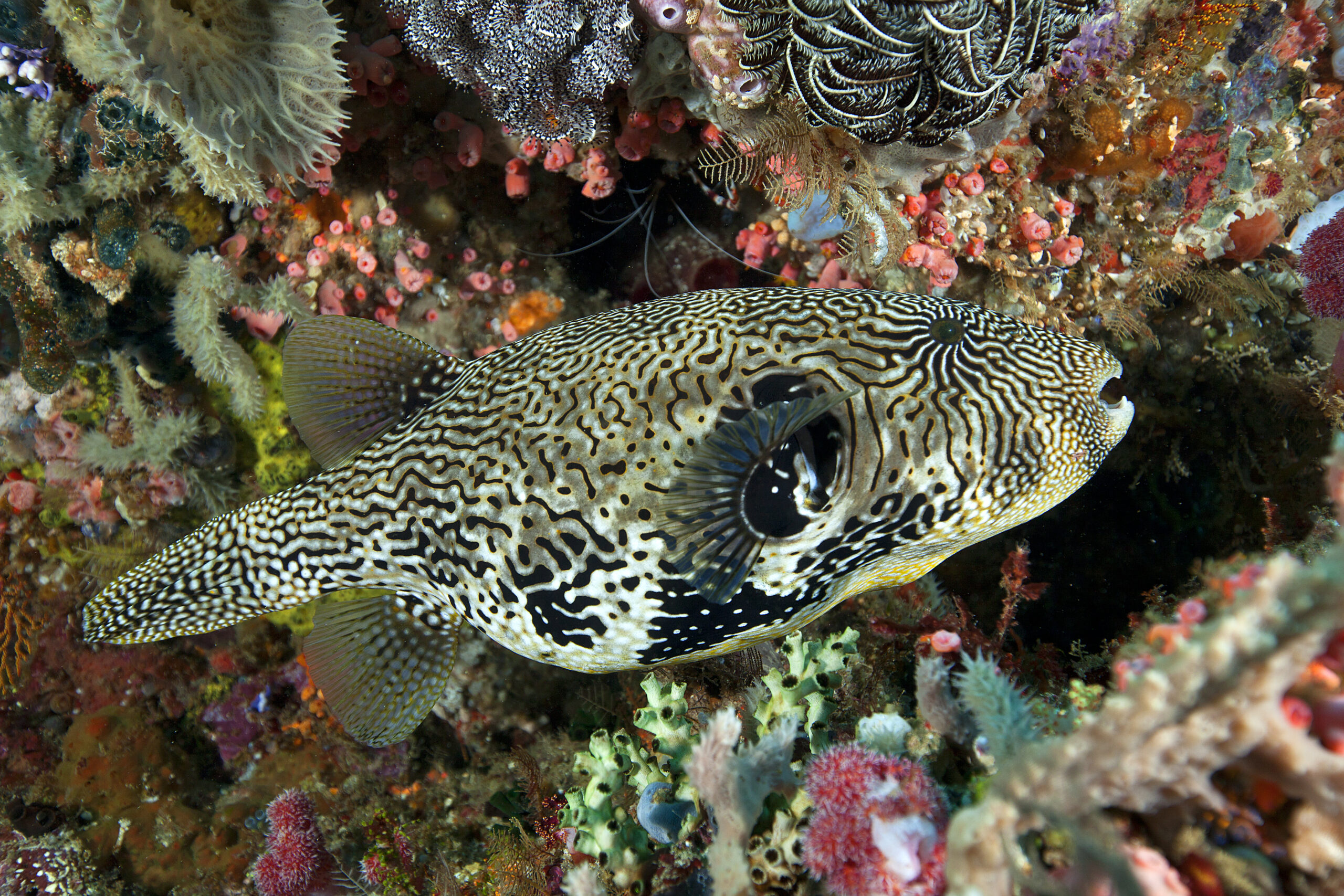
“They say you can see more life by swimming on a coral reef for five minutes compared to spending a month in the forest. Now we all know how abundant forests are, so you can just about imagine how abundant coral reefs are too.”
Although the scuba instructor finds nature fascinating and creative for all kinds of life on land, underwater he sometimes finds repetitions by land’s nature. He speaks of his encounters with fish which mimic certain animals, even following their lifestyle, like the parrot fish whose beak, mouth and colouring are very similar to a parrot on land.
He admits that explaining underwater life is quite a task, but that is because the lifestyle underneath is beyond words. “It is a complete kaleidoscope of colours! White fish to purple to yellow and pink… Every colour you can imagine is present there, on the scales of a fish; on a coral reef, and inside of those coral reefs are tiny fishes, round fishes, larger fishes… There’s just so much life!”
As Verma passionately put it, every part of the ocean inhabits different kinds of life depending on the environment. One sees beauty, abundance, colours underwater and begins wondering why it is the way it is, eventually feeling the connection with the other world. As in… “Why is this fish created this way? It’s got purple and blue, but on the scales it’s got a yellow streak.”
Pure art; having fun; nature at its best; while it seems the man could go on and on with exemplatives to describe the scenic mass, I was very curious to know how he captures it all with a camera in the water. And while it seemed to be a complicated process, the photographer explained that it is, in fact, the opposite; clicking photographs underwater is actually simple.
“Your camera goes into a casing which, in underwater terminology, is called housing. This keeps the camera waterproof. Then depending on which lens you use, you have different ports to put in the front and encapsulate the lens; for wide angle lenses you use dome ports, and for macro and hyper lenses, you use the flat ports. Between the ports and the housing, your camera and lens are secure. With external arms, you can bounce strobes or video light based on whether you’re doing photography or videography. These strobes are fixed to your camera or cable; therefore, when you trigger the shutter, your strobes fire and you’re able to light up and create an underwater picture.”
Nature meets Technology! Or rather, technology is nature’s spotlight. It’s a transfixing subject. But as advanced as it may be, I bet the natural elements play a huge part in displaying the raw sea’s aesthetics, and Sumer Verma agrees. “When the sun is reasonably top, say between 12:00 p.m. and 4:00 p.m., you can drown into the ocean because that’s when the light penetrates into the water, making it a good time to do underwater photography.”
A photographer is able to play with light; just like on land with golden light and early morning hues, underwater there remain more options. There the sun can be used as a backlight element, as the soft light element and up to the first five meters; the sun is enough to light up the flora and fauna underwater, expelling the need for artificial light. It’s truly an exciting process, but, according to Verma, the most challenging part comes when he dives in deeper.

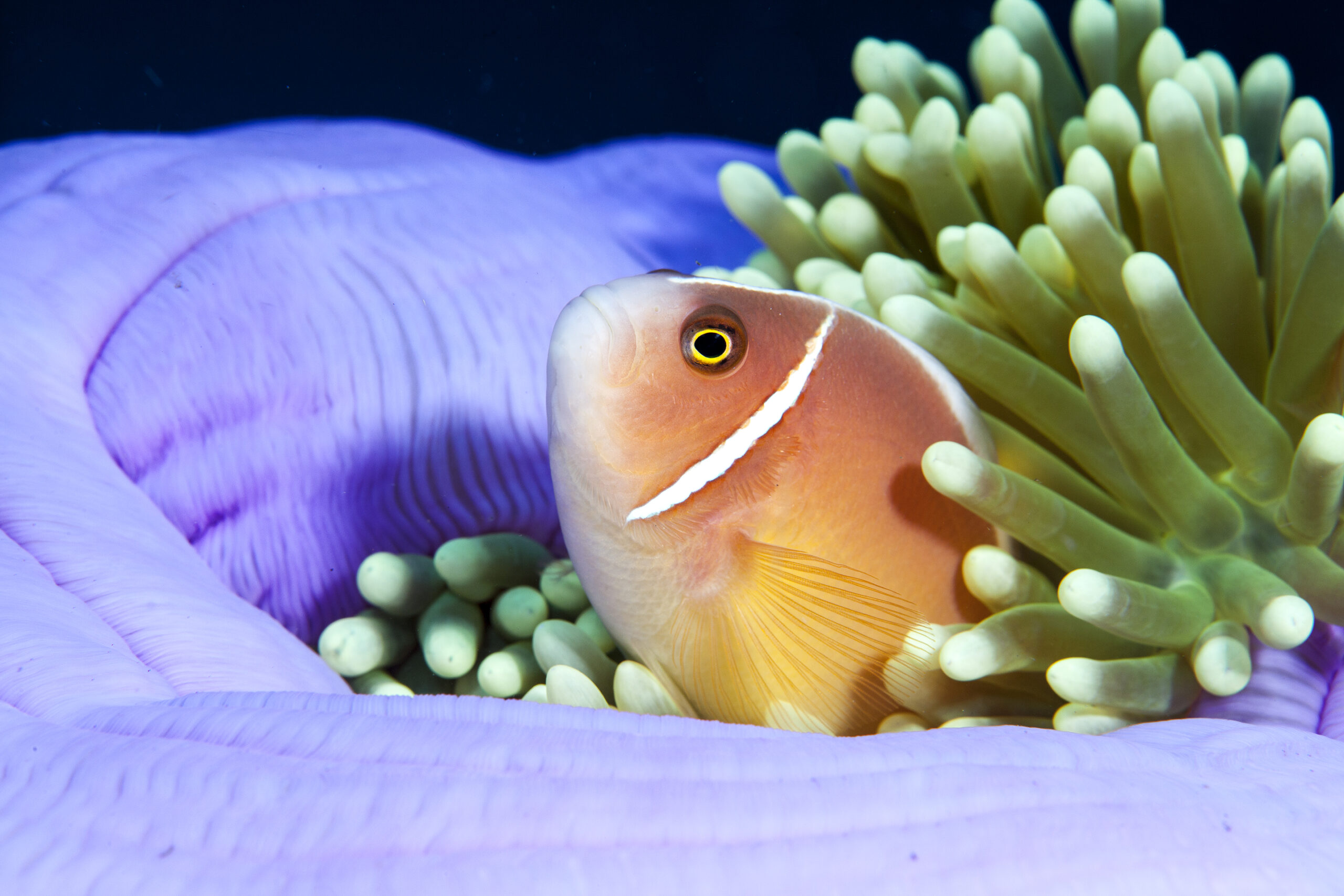
“When you dive deeper in, over 5 meters to 20 meters, the water absorbs the light and acts like a blue filter. The challenge of underwater photography is that you’re shooting in a very dense medium. Thus, it acts like a filter. It diffuses light, colour and sharpness from your images. The challenge to overcome is to overcome water itself, so you can get good quality images. Not to mention, the idea is to get close to your subjects; and the less water between your lens and the subjects, it will only sharpen the subjects. In order to achieve that, you can’t be far from the subjects and zoom in. You need to get as close as possible to the subjects. Therefore, the two main disciplines of underwater photography are very wide angles, where you use lenses like 14 mm and 16 mm, and 18 mm for rain, shipwrecks and coral reefs; and close-up with macro lenses like 60, 100, even 200 mm to do macro photography of minute creatures which live inside the ocean. It’s a totally different type of photography because the wide angle allows you to see sunlight, the blue water and the spirit of the sea in the photograph, whereas the macro allows you unique stories of each individual fish’s personality and you can really see the finer details of the fish really clearly; some which you don’t even notice with your naked eye.”
And as we kept going over the details of the ocean and its inhabitants, it became even more lucid that his subjects are wild and free. In other words, they may easily shy away from him and his camera, and he would have no control over them. When I brought up the subject, surprisingly, he had a different opinion. As curious as he finds marine life, marine life too finds him curious and doesn’t necessarily shy away from him. Breeds like Manta Rays, especially, swim towards him instead of the other way to investigate and interact in their own way. “They want to know who you are, what you are, what you are doing there, and being in their natural environment, they find us very curious. After several attempts, I think we can get it across that we are humans.”
We drew close to the end of the conversation on the effervescent ocean and I noticed how fabulously arrested he is by the water and the life under, which led me to ponder whether Sumer Verma really belonged on land anymore. I asked him just that. “Well, I’m a Piscean. So, that should say a lot.” he joked.
“I’ve been a diving instructor since 2000. My profession is to be a scuba diving instructor and an underwater photographer. My business is to be a part of the scuba diving business in the Andaman. All these things clearly say that I’m a water person.”
“I love the water!
I feel the happiest in water and near the oceans!
And I guess I belong there. But having said that, I love nature. I enjoy being near the mountains, the rivers, on islands or even somewhere near wildlife like in Africa where it is equally fascinating and magical. It really allows you to think of the beauty and the magnitude of nature.”
Although the diver, instructor, photographer and film-maker seemed to have ended the note with a balance of land, he finished with, and I quote, “I am what I am, a water person through and through!”
Share