


The Sage of Sangam
Blurb: Poets compared climbers to life, creepers to lovers and trees to every aspect of life proving that flora and fauna have been a part of literature since its dawn
– Vimala Soundarapandiyan
Each of us have heard stories in our childhood. I remember my evening rendezvous with my mother listening to fascinating stories of lions, foxes and speaking trees. My siblings and I loved the meows, purrs, and the swishing of trees in the wind. These stories rendered an experience with nature that no biologist’s book could.
The flora and fauna have captured their own space in stories, especially those written for children; we live with those characters, we talk to them and even befriend them. It created a phantasy where we fell in love with Elsa from Born Free and Winnie the Pooh. We were fascinated with the talking flowers in Alice in Wonderland and wished for the enchanted rose from the Beauty and the Beast. These stories revealed reflections of flora and fauna in a leisurely fashion without fanfare. Both overtly and covertly, the wild fills the theme and metaphor in literature.
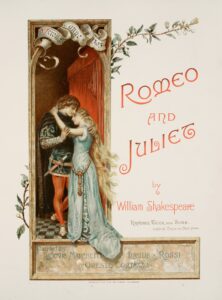
Illustration of Romeo and Juliet from the public domain collection on Artvee — based on historic editions of William Shakespeare’s play (images courtesy Artvee / historic public domain artworks).
In William Shakespear’s Romeo and Juliet (Act 2 Scene 2)
“What’s in a name? That which we call a rose
By any other name would smell as sweet;” says Juliet.
While English literature tends to romanticise and create suspense with the flora and fauna, the Tamil literature brings out the colours and fragrances of flora and fauna through its literary achievements like Ainkurunnuru, Pathupattu and Ettuthokai. Sangam poets described hills, lakes, greenery and wildlife in their poems. The description is so accurate that it is even said to be a botanist’s guide to the plants.
The poets treated nature in connection with human life. Ainkurunnuru, the anthology with five hundred lyrics, attributes each hundred lyric to Kurunji (mountains), Mullai (forest), Marudham (grassland), Neithal (coastal region) and Palai (desert), interwoven with the emotions and feelings of young men and women, especially lovers. Poets like Ammuvanar paint the picture of Neytaltinai (the second hundred lyrics in Ainkurunuru) epithets.
(Akananuru Verse: 280
Ollinare cerunti (sedge with blossoms of bright colours)
Akal ilaip punnai (the laurel tree with broad leaves)
Ner kotip pacatumpu (the tender otumpu* creeper with slender stems))
The sangam poets retained the imaginative freshness and appropriateness of the plants and the landscapes. Their verses expressed intimacy, imagination and collective memories of the perceived beauty of nature. Poets compared every aspect of nature to human characters with the use of similes and metaphors. It was an evident feature of the Sangam literature and not to mention, exhilarating.
If you take Akananuru, the poet compares the heroine’s eyes to the Neytal (seashore) blooms blossoming at dawn which is said to be a pair of kuvalai* flowers.
(Akananuru Verse: 10)
(Akananuru verse: 307
“The eyes with tears glisten like the
Kuvalai flowers with the rain drops
After a shower in the winter”)
The persona in these poems discover themselves with and in nature. Each verse in these poems is an expression of personal experiences of the poets belonging to that era. The images in the poems give birth to evident animated scenes in the reader’s mind manifesting the truth and simplicity the poets used, to treat nature in the texts. It depicts how nature is entwined with sentiments of love and gracious imagination transcending one to the sangam age and its lush landscapes all the while giving a chance to empathise with the lovers and the interlocutors in the poem.
Reading through the verses of Kuruntokai, Akananuru and Tolkappiyam, I was struck by the evolution of the poetry writing style on nature. And as I ponder over the idea of nature and poetry 2000 years ago, my contemporary thinking mind immediately connects to pantheism. But in reality, these texts take a different turn and connect with every aspect of life. This again strikes me, that glorification of nature ended with poets like Appar, Ammuvanar, Itaikkatanar and Wordsworth. The loop in reality is broken and we have not much left to string into words.
Note: The poetic verses are direct translations of the Sangam literature in ancient Tamil and some words may be roughly translated.
*Otumpu roughly translates to a flower
*Kuvalai – fragrant water-lilies
Share